RESEARCH ASSISTANTS
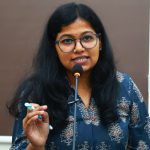 Treesa Reena John is a PhD scholar at the Department of Communication, University of Hyderabad, India, pursuing her research under the supervision of Prof. Vinod Pavarala and Prof. Kanchan K. Malik. Her research situates community radio in the context of the digital revolution, specifically exploring digital transformation in the community radio sector in South Asia (India, Nepal and Bangladesh). She is a recipient of the ICSSR Doctoral Fellowship 2024-2025.
As a Research Assistant with the UNESCO Chair, she has contributed to projects, including UNESCO IPDC’s Indigenous Languages and Community Radio in India, SPARC’s Community Media, Participation and the Decolonisation of Indigenous Knowledge Systems, and UNESCO’s Transforming MENtalities: Engaging Men and Boys Through Community Radio. As part of the SPARC project, she visited the University of Queensland, Australia, in April 2025.
She presented her paper Digital Shift in Community Radio: A Study on the State of Digital Adoption in Community Radio Stations in Bangladesh at IAMCR 2025 in Singapore. She currently serves as Editorial Assistant for the Journal of Alternative and Community Media (Intellect). Prior to her doctoral studies, she worked as a Social Media Editor at The New Indian Express, Hyderabad, India and as a Lecturer and Coordinator at the Department of Strategic Communication and Journalism, Sophia College for Women, University of Mumbai, India.
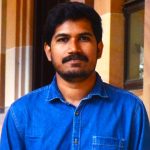 Vamsi Krishna Pothuru is a PhD student in the Department of Communication at the University of Hyderabad, India. Under the supervision of Prof. Kanchan K. Malik, his research examines information disorder in Indian villages and the responses of various stakeholders, including civil society organisations. One key area of his research focuses on a community-centric approach to digital media literacy interventions aimed at addressing misinformation.
He completed his Master’s in Communication from the Department of Communication at the University of Hyderabad, with a thesis on fact-checking websites in India. His research interests include information disorder, digital divide, media and information literacy (MIL), and community media.
He is currently working as a research assistant for the SPARC (Scheme for Promotion of Academic and Research Collaboration), Government of India (GOI) project titled “Community Media, Participation and the Decolonisation of Indigenous Knowledge Systems.” Previously, he served as a research assistant for the IPDC (International Programme for the Development of Communication), UNESCO project titled “Indigenous Languages and Community Radio in India: Strengthening Capacities of Community Radios to Promote and Revitalize Indigenous Languages.” Before beginning his PhD, he worked as a fact-checker at NewsMeter, an IFCN (International Fact-Checking Network) certified media house in Hyderabad, India.
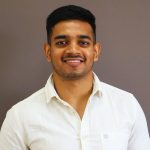 Pradumm Singh is a doctoral researcher in the Department of Communication at the University of Hyderabad, specializing in the intersections of grassroots communication and digital healthcare. He holds a Master’s degree in Mass Communication from Pondicherry University,where he was a rank holder, and a Bachelor’s degree in Journalism and Mass Communication from IGNTU Amarkantak, where he graduated as a Gold Medalist.
His academic excellence is further distinguished by qualifying for the UGC NET JRF. His doctoral research, titled ‘Community Media and Digital Health in India,’ employs participatory research approaches to examine how community media platforms, including radio stations and grassroots collectives, function as vital “last-mile” intermediaries. His work explores the role of these platforms in implementing multi-platform digital health interventions and navigating national frameworks such as the Ayushman Bharat Digital Mission (ABDM), CoWIN, and e-Sanjeevani.
By focusing on creating culturally relevant content and training community workers as digital health facilitators, his research addresses critical gaps in health literacy and misinformation.
Pradumm’s scholarly interests include Community Media, Digital Health Ecosystems, Participatory Communication, and Health Information Literacy in underserved communities.